Highway tolling is one of the most visible examples of how RFID can transform everyday infrastructure.
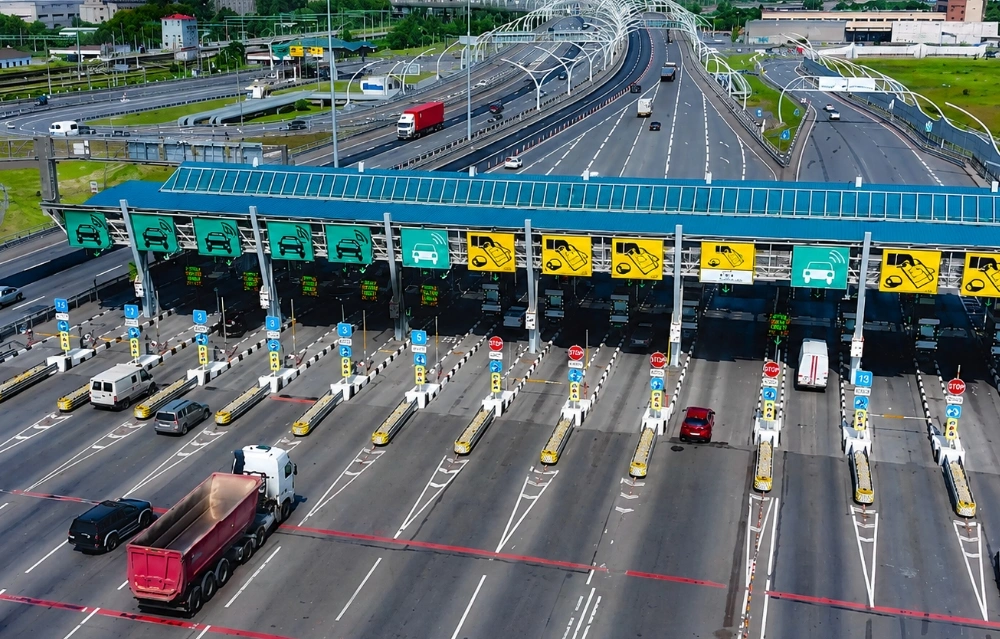
Before electronic toll collection became mainstream, toll plazas were heavily dependent on manual payment, cash handling, visual checks, printed receipts, and physical stopping at booths. This created long queues, higher waiting time, revenue leakage risks, fuel wastage, congestion, and operational pressure on toll operators.
India’s FASTag programme changed this at national scale.
Powered by RFID-based vehicle identification and digital payment integration, FASTag enabled toll plazas to identify vehicles automatically, deduct toll electronically, and move traffic with significantly reduced manual intervention. What was once a cash-heavy checkpoint became a digital infrastructure layer for mobility, payments, and highway efficiency.
i-TEK has played a significant role in this transformation through its RFID tolling expertise, FASTag enablement, reader infrastructure, and long-standing work in electronic toll collection. The result is not just faster toll payment. It is a stronger foundation for connected, accountable, and scalable transport infrastructure.
National Scale of FASTag Adoption
FASTag has become one of India’s most successful RFID-led public infrastructure transformations.
As per NPCI NETC statistics, by May 2026, FASTag issuance had crossed 12.51 crore, with 375.23 million monthly transactions and ₹7,308.07 crore transaction value recorded for the month. IHMCL reported 47,817 lakh ETC FASTag transactions and ₹82,342 crore in FASTag collection during FY 2025–26 across NH, MoRTH, and State Highway toll plazas.
The Ministry of Road Transport & Highways has also stated that more than 98% of user fee on National Highways is now collected through FASTag. This reflects the maturity of India’s RFID-led tolling ecosystem and its widespread acceptance among highway users.
Key Ecosystem Indicators
Indicator | Figure |
FASTags issued by May 2026 | 12.51 crore+ |
NETC FASTag transactions in May 2026 | 375.23 million |
NETC transaction value in May 2026 | ₹7,308.07 crore |
FY 2025–26 ETC FASTag transactions | 47,817 lakh |
FY 2025–26 ETC FASTag collection | ₹82,342 crore |
National Highway user fee collected via FASTag | More than 98% |
Average fee plaza crossing time under ETC | 40 seconds |
Earlier manual tolling crossing time | 12.23 minutes |
These figures show that RFID-based tolling is no longer a limited automation project. It is now a critical part of India’s digital mobility and payment infrastructure.
Business Challenge
Manual toll collection created several operational and economic challenges for road operators, commuters, logistics players, and public authorities.
Congestion at Toll Plazas
Manual payment required vehicles to stop, interact with toll staff, exchange cash or receipts, and wait for barrier clearance. During peak traffic, this created long queues and inconsistent vehicle throughput.
High Cash Dependency
Cash-based tolling increased the burden of cash handling, reconciliation, auditing, and revenue assurance. It also increased operational dependency on booth-level manual processes.
Delayed Vehicle Movement
Every delay at a toll plaza had a cascading impact on logistics timelines, commuter convenience, fuel consumption, and traffic flow.
Limited Transaction Transparency
Manual tolling made it harder to maintain real-time, vehicle-level transaction trails across large toll networks.
Scalability Constraints
As highway traffic increased, manual tolling could not scale efficiently without adding more booths, more manpower, and more physical infrastructure.
The need was clear: tolling had to become faster, more transparent, more automated, and more scalable.
i-TEK’s RFID Tolling Solution
i-TEK’s role in RFID tolling has been built around one clear objective: enabling reliable vehicle identification at tolling points through RFID technology.
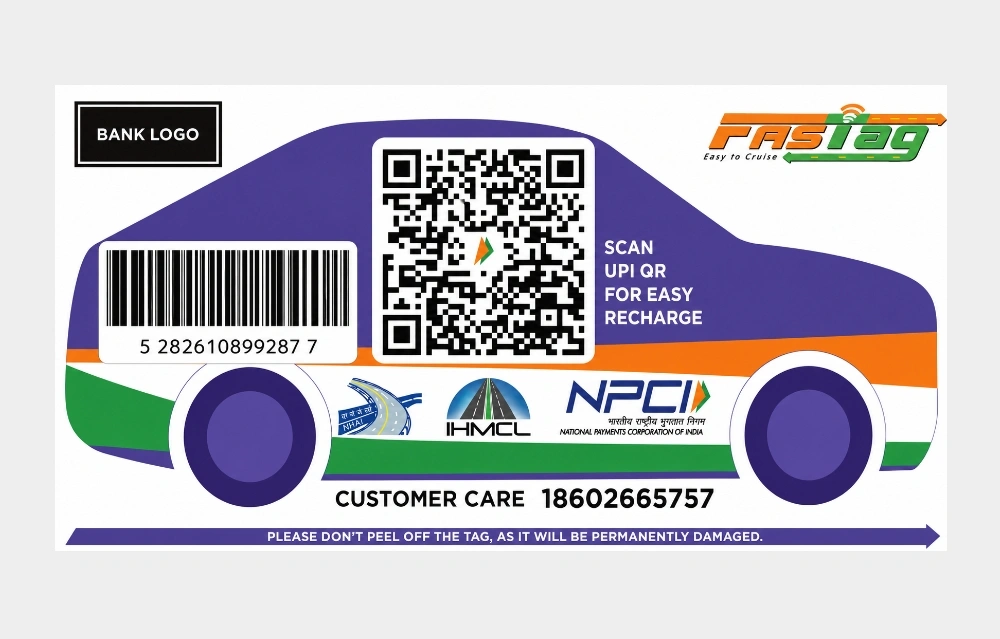
FASTag uses RFID technology to identify a vehicle through a tag affixed to the windshield. When the vehicle passes through a toll lane, the RFID reader captures the tag identity, the system validates the transaction, and the toll amount is deducted digitally through the linked FASTag account.
i-TEK’s contribution to this ecosystem includes RFID tolling tags, toll-lane RFID infrastructure, reader deployment, integration readiness, and long-range vehicle identification capability. i-TEK’s internal collateral records 45+ million vehicles enabled with RFID tolling FASTag, highlighting the scale of its contribution to India’s electronic tolling journey.
This is where RFID becomes more than an identification technology. It becomes a trusted mobility transaction layer.
How RFID Tolling Works
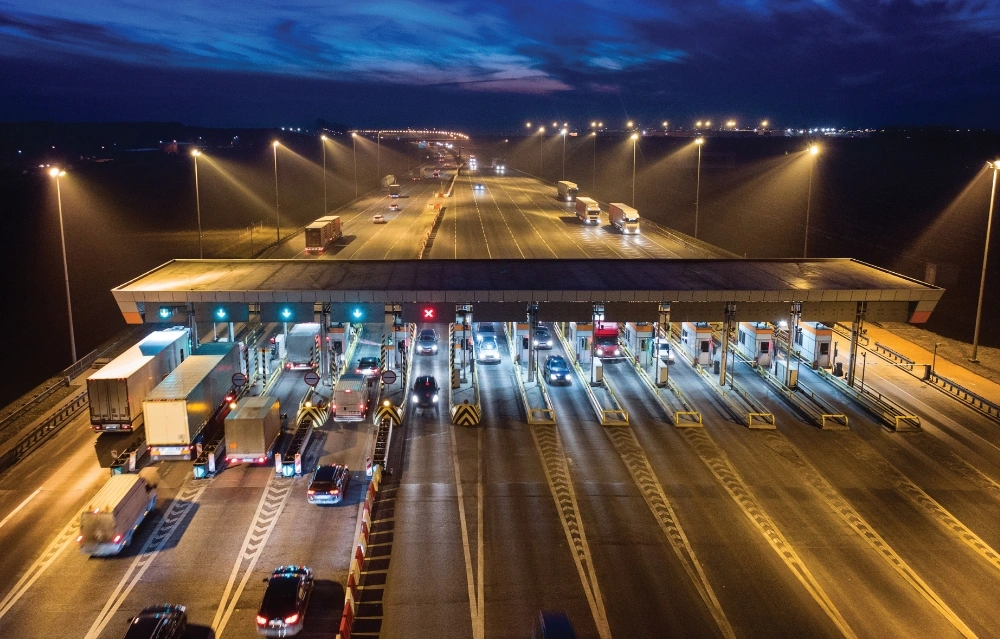
At a toll plaza, RFID technology enables vehicle identity to be captured without manual scanning or physical cash exchange.
The process typically works in five steps:
1. Vehicle Approaches the Toll Lane
The FASTag affixed to the vehicle windshield enters the RFID read zone.
2. RFID Reader Captures Tag Identity
The toll-lane RFID reader detects the tag and captures the vehicle-linked identity.
3. System Validates the FASTag
The tolling system validates the tag, vehicle class, account status, and transaction eligibility.
4. Toll Transaction Is Processed
The applicable toll amount is deducted digitally through the FASTag-linked payment system.
5. Vehicle Movement Is Cleared
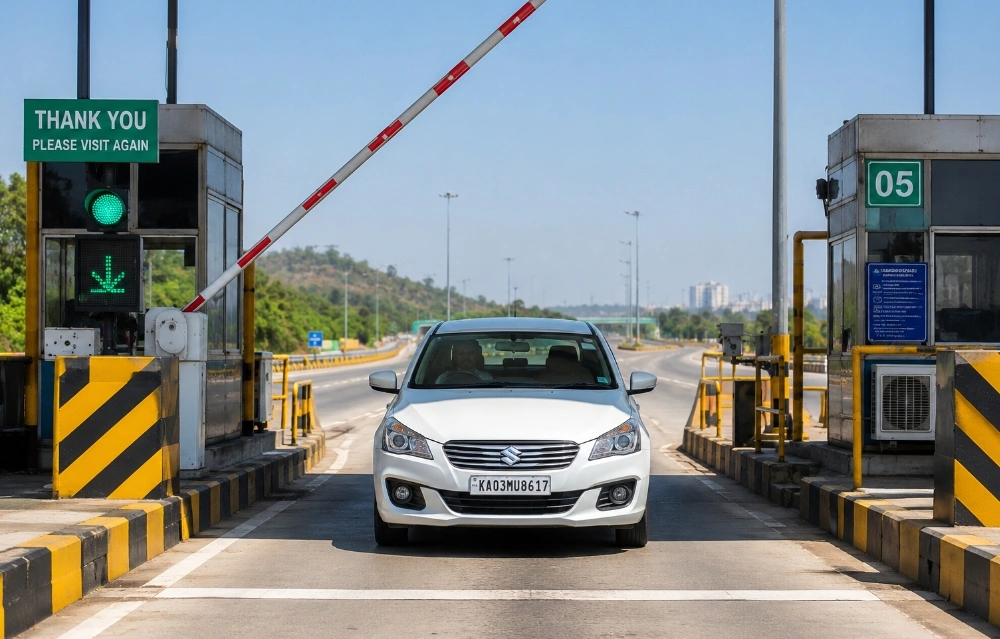
The barrier opens or the vehicle passage is recorded, depending on the tolling configuration.
This entire process helps reduce the need for cash handling, manual verification, and long stopping time at toll plazas.
Operational Impact
The impact of FASTag is visible at both user and infrastructure level.
Faster Vehicle Throughput
The most direct benefit is reduced crossing time. As per the MoRTH statement, average crossing time under ETC operations is around 40 seconds, compared with 12.23 minutes per vehicle under the earlier manual tolling system.
Improved Toll Collection Efficiency
With more than 98% of user fee on National Highways collected through FASTag, electronic toll collection has become the dominant toll payment mode across India’s highway network.
Reduced Manual Intervention
RFID-based tolling reduces dependency on cash handling, manual receipt generation, and booth-level payment processing.
Better Revenue Assurance
Digital transactions create stronger audit trails and reduce the risks associated with cash leakage, manual reconciliation, and delayed reporting.
Enhanced Commuter Experience
For highway users, FASTag improves convenience by enabling automatic toll payment and reducing the friction of stopping, searching for cash, and waiting in long queues.
Logistics and Mobility Benefits
For commercial vehicles and logistics operators, reduced toll delays support better trip predictability, faster movement, and improved route efficiency.
i-TEK’s Contribution to Nation-Building
tronic toll collection is not just a transport automation project. It is a nation-building use case.
FASTag helped India move from cash-based highway tolling to digital toll collection at national scale. It strengthened transparency, improved toll plaza efficiency, supported digital payments, and created a more reliable foundation for connected mobility.
i-TEK’s journey in RFID tolling reflects its larger purpose: building advanced technology solutions that improve operational efficiency, optimize cost, and enrich user experience. From RFID-enabled tolling to supply chain traceability and infrastructure identification, i-TEK has consistently focused on converting physical movement into trusted digital action.
The FASTag use case is especially important because it touches millions of citizens directly. Every faster toll crossing, every automated deduction, every reduction in waiting time, and every transparent transaction is a small but meaningful improvement in daily highway movement.
Technology Relevance for the Future
India’s tolling ecosystem is now moving toward the next stage of transformation, including barrier-less tolling, MLFF-style models, ANPR integration, and more advanced infrastructure-scale vehicle identification.
This future will require tolling systems that can identify vehicles at speed, validate movement, integrate with payment and enforcement systems, and maintain reliable digital records.
i-TEK’s Skanixa BX-LR and Garuda Vigil platform direction aligns strongly with this evolution. Skanixa BX-LR is positioned as a long-range infrastructure RFID system for vehicle, carrier, gate, yard, parking, tolling, and large-area movement identification. It is designed to capture vehicle and carrier identity across tolling lanes, gates, yards, parking points, and transport corridors, converting those reads into platform-level business events.
This makes the FASTag experience highly relevant beyond toll plazas as well. The same long-range RFID intelligence can support logistics yard movement, factory gate automation, parking access, cargo terminal validation, and secured vehicle movement.
Business Value Delivered
The RFID-led tolling transformation delivered value across multiple dimensions:
The larger value is not just that tolls became digital. The real transformation is that vehicle movement became identifiable, accountable, and actionable at infrastructure scale.
Strategic Impact
FASTag is one of the strongest examples of RFID moving from enterprise operations into national digital infrastructure.
It proves that RFID can work at massive scale, in everyday public environments, with real impact on citizens, transport operators, concessionaires, banks, and government systems.
For i-TEK, this case represents one of its most important use cases because it demonstrates the power of RFID beyond warehouses and stores. It shows how the same core principle — identifying physical movement and converting it into trusted digital action — can transform highways, toll plazas, gates, corridors, and infrastructure networks.
This is the future of intelligent mobility.
Not merely automated toll collection, but connected movement intelligence.