

RFID Tags & Labels

Overview

i-TEK’s RFID ecosystem. Built for infinite possibilities

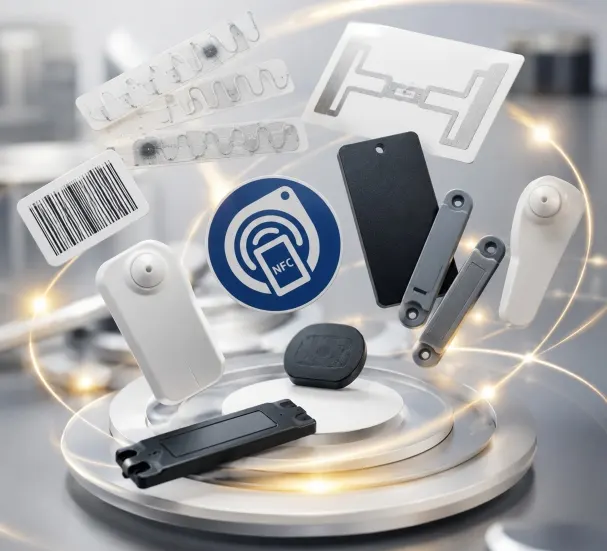
RFID works best when the tag is chosen for the object, environment, and job it needs to perform. At i-TEK, we engineer tags for basic applications and demanding industrial scenarios, with a focus on precision and reliable performance. Our portfolio includes hundreds of RFID tags and labels across labels, inlays, hard tags, hang tags, mount-on-metal tags, NFC tags, and embedded formats. They range from ultra-compact micro tags to large industrial-grade tags, giving businesses the right fit for varied assets, environments, and applications.
The right identity layer is central to RFID success. Products, assets, vehicles, containers, documents, and inventory units all behave differently based on material, movement, environment, read range, lifecycle, and business workflow.
That is why we approach tags and labels as application-specific enablers of visibility, traceability, and automation. Across assets, inventory, vehicles, documents, and supply chains, the right RFID tag turns physical movement into dependable digital data.
  • UHF RFID labels and inlays for item-level identification
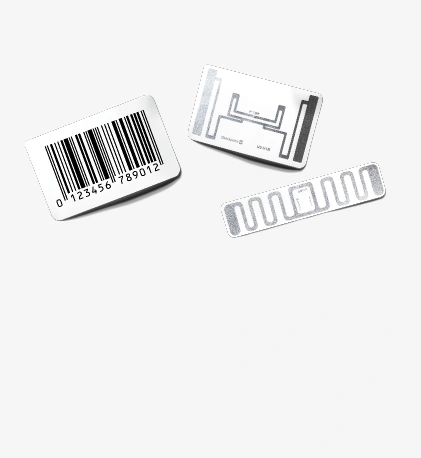
    RFID labels

    Lightweight RFID labels for high-volume item-level tracking across retail, logistics, warehousing, and supply chain operations. They work well where fast deployment, scalable tagging, and clear inventory visibility are needed.

  • RFID mount-on-metal tags for tracking metallic assets
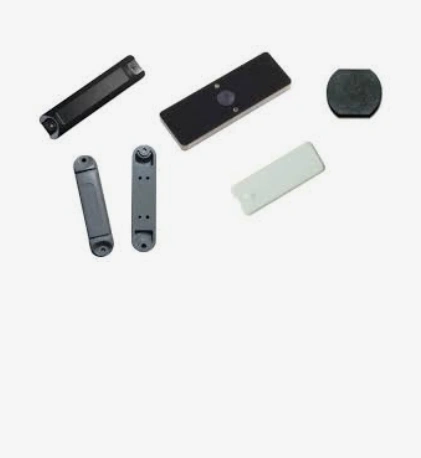
    RFID mount-on-metal tags

    Specialised RFID tags designed to perform on metal surfaces and in demanding industrial environments. They are suited for tools, machinery, metal assets, industrial components, containers, and similar applications where standard labels may fall short.

  • RFID hangtags for apparel and retail item identification
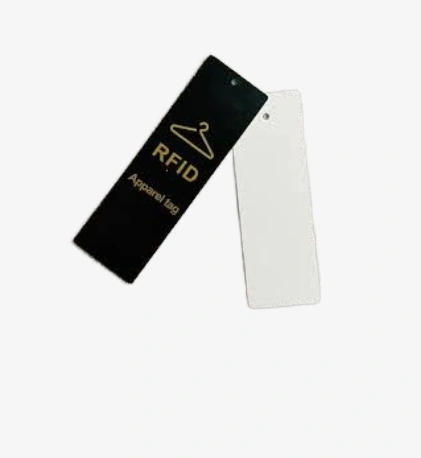
    RFID hang tags

    RFID hang tags for apparel, fashion, lifestyle, and retail merchandise. They enable item-level visibility, faster stock counts, smoother replenishment, and more efficient checkout workflows.

  • Washable RFID tags for garments, uniforms and textile tracking
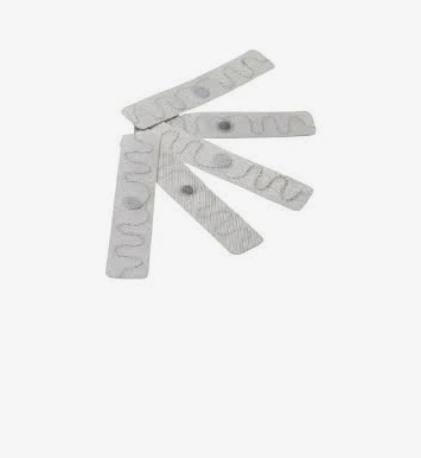
    RFID wash care tags

    Durable textile RFID tags designed to withstand repeated washing cycles. They are suited for laundry, garments, uniforms, hospitality linen, healthcare textiles, and garment lifecycle tracking.

  • NFC tag for contactless identification and data access
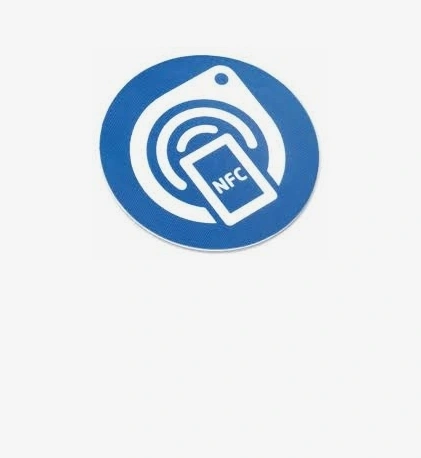
    NFC tags

    Short-range communication tags that connect physical products with digital experiences. They can be used for authentication, customer engagement, product information, warranty validation, and brand protection.

  • Dual-technology RFID hard tags for retail merchandise security
    RFID dual hard tags

    Dual-technology tags combining RFID and EAS for retail environments. They help bring item-level inventory visibility and loss prevention into the same workflow.

Explore our RFID tags, labels, inlays, NFC tags, hard tags, hang tags, mount-on-metal tags, wash care tags, and application-specific identification options.

Key Features

Wide frequency compatibility +
✓
Wide frequency compatibility

Wide frequency compatibility

Our RFID tag portfolio supports LF, HF, UHF, and NFC requirements, helping businesses choose the right frequency for their read range, environment, and application.

Diverse materials & environments +
✓
Diverse materials & environments

Diverse materials & environments

Tags can be selected for different surfaces and assets, including paper, plastic, fabric, glass, metal, cartons, vehicles, industrial equipment, and specialised items.

Durable for demanding use cases +
✓
Durable for demanding use cases

Durable for demanding use cases

Application-specific tags can support outdoor exposure, industrial use, repeated handling, washing, moisture, heat, and other challenging conditions.

Scalable from item to pallet level +
✓
Scalable from item to pallet level

Scalable from item to pallet level

Our tags and labels support identification across products, documents, cartons, bins, pallets, assets, containers, and vehicles.

Aligned with RFID and EPC standards +
✓
Aligned with RFID and EPC standards

Aligned with RFID and EPC standards

Our RFID tagging approach supports globally relevant RFID and EPC standards for compatibility, traceability, and enterprise readiness.

Flexible formats for easier deployment +
✓
Flexible formats for easier deployment

Flexible formats for easier deployment

From compact inlays and labels to rugged hard tags and specialised formats, our portfolio helps RFID fit the object, workflow, and environment.

Overview

How it works

Step 1
Define read requirements

We begin by identifying the required read range, read speed, and interaction type. Short-range identification may need LF, HF, or NFC, while long-range inventory and supply chain applications typically use UHF RFID.

Step 2
Assess the object and environment

We evaluate the object’s surface, size, material, movement, handling conditions, and operating environment. This includes exposure to metal, heat, moisture, chemicals, outdoor conditions, washing cycles, or repeated handling.

Step 3
Select the right tag type

Based on the use case, we match the right format, such as a label, hang tag, hard tag, NFC tag, wash care tag, mount-on-metal tag, windshield tag, or embedded RFID format.

Step 4
Validate encoding and data needs

The tag must support the required identification logic, such as EPC, SKU, asset ID, vehicle ID, batch data, serialized product identity, authentication data, or enterprise-specific coding.

Step 5
Ensure reader and platform compatibility

The selected tag is aligned with the Skanixa™ reader ecosystem and GarudaVigil™ platform workflow, so the captured identity can be processed, validated, and integrated with enterprise systems.

Step 6
Test for real-world performance

Before scale deployment, we validate tag placement, orientation, read reliability, environmental performance, and workflow fit.

Step 7
Scale with confidence

Once the tag is validated, the solution can scale across products, assets, locations, facilities, stores, warehouses, vehicles, and supply chain networks.

Business Benefits

Business Benefits

Improved inventory accuracy

The right RFID tag enables reliable item-level or asset-level identification, helping businesses improve inventory accuracy and reduce stock mismatches.

Real-time operational visibility

RFID tags convert physical objects into trackable data points across stores, warehouses, manufacturing lines, logistics nodes, gates, and enterprise workflows.

Reduced manual errors

Automated RFID identification reduces reliance on manual barcode scanning, paper records, and repetitive item-level checks.

Faster stock counts and processes

RFID-enabled tags help speed up stock counting, inward validation, outward dispatch, asset audits, and movement tracking.

Stronger asset lifecycle tracking

RFID tags help businesses track assets from procurement to usage, transfer, maintenance, storage, and retirement.

Better loss prevention

For retail and high-value environments, RFID and dual-technology tags can improve product visibility and help control shrinkage.

Stronger supply chain traceability

RFID labels, hang tags, inlays, and hard tags help create traceable product journeys across vendors, distribution centres, stores, warehouses, and logistics networks.

Digital twin-ready object identity

A correctly tagged object becomes a reliable data point in the digital twin of operations. When captured through Skanixa™ readers and processed by GarudaVigil™, physical movement can be reflected in a live digital view.

Scalable foundation for growth

A well-designed tagging strategy helps businesses scale RFID from pilot deployments to multi-site, multi-category, and multi-industry operations.
Overview

Technical Specifications Table

ParameterDescription
Read rangeDepends on frequency, tag design, reader type, antenna configuration, and application requirement
Material compatibilitySpecialized tags may be required for metal, liquid, glass, textile, plastic, vehicle surfaces, or industrial equipment
Environmental resistanceTag selection should consider exposure to heat, moisture, chemicals, washing, outdoor conditions, and repeated handling
Form factorIncludes labels, hard tags, hang tags, inlays, NFC tags, wash care tags, embedded tags, and mount-on-metal tags
Encoding supportTags can support EPC, serialized identity, SKU mapping, asset IDs, vehicle IDs, batch references, or application-specific data
ComplianceTag selection should align with EPCglobal, regional RFID standards, and industry-specific requirements wherever applicable
Reader compatibilityThe tag should be selected based on compatibility with the intended Skanixa™ reader or RFID reading environment
Platform integrationCaptured tag data can be connected with Garuda Vigil™ for validation, dashboards, workflows, and enterprise integration
Application lifecycleThe tag must match the expected lifecycle of the product, asset, garment, vehicle, container, or equipment
Security requirementTamper-evident, dual-technology, NFC, or specialized tags can be considered where authentication or loss prevention is required
Overview

Find the right tag for your application

Connect with our RFID experts to identify the most suitable tag, label, inlay, or specialized RFID format for your object, environment, workflow, and enterprise system requirements.